
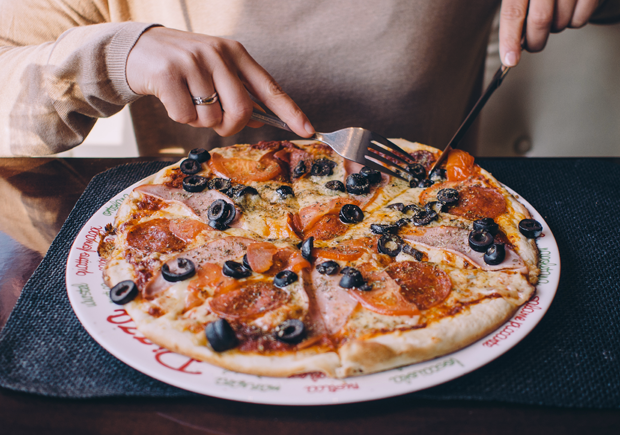

You know how the crust at your favorite pizza joint is crispy on the outside, soft on the inside and full of flavor? When done right, pizza dough is crispy and crunchy and delicious. Here are 5 tips to up to improve your pizza crusts; endiamo!
1. Use enough salt
Flour is not enough to add flavor, its bland taste does not make a great base for your toppings so it is imperative you season the pizza dough well. The salt from the topping ingredient more often than not, will not be sufficient to bring up the flavors. A good coffee spoon for 4 cups flour is a minimum. Of course, keep in mind the saltiness of your toppings and scale back accordingly if needed—especially when using anchovies, black olives, cured ham…
2. Never use a rolling pin
A rolling pin gets rid of air bubbles naturally present in the dough, leaving the finished product dense and tough. Instead, work with your hands to pull and stretch the dough out to your desired shape and size. Don’t worry about an irregular shape, your pizza can be an oval, a square, or a triangle: It can be any shape you want it to be. If the dough if difficult to work with, let it sit at room temperature for 15 minutes to let the gluten relax and the temperature rise before trying again.
3. Don’t go heavy on the toppings
An authentic pizza doesn’t need tons of toppings. By supercharging your pizza with 4-cheese mix, 3 sorts of sausage, meatballs, smoked ham, mushrooms, egg yolks, pineapple, you’re just ruining the key factor to a crisp pizza crust: All these ingredient will make the crust soggy. Instead, choose a handful of ingredients that complement each other and use restraint. Opt for mozzarella, a simple tomato sauce, and ham for instance. A drizzle of olive oil once the pizza comes out of the oven is also good thing.
4. Par-bake if necessary
It’s a handy trick that keeps crust from getting soggy. If (anyway) you’re topping your pizza with something moist or wet like fresh mozzarella or pickled capers, you want to partially bake the crust before proceeding with the add-ons. This way the crust will be just firm enough to stand up to the extra weight, then make your pizza pretty.
5. Bake at maximum temp
350°F (180°C) will get you nowhere on your quest for the perfect pizza crust—if you bake a pizza like you would with a pound cake, you’ll end up with a soggy crust and overcooked toppings. Go very hot and quick: push that oven temperature to 500°F (260°C), or as high as you can go without broiling, and keep watching the pizza. When the cheese is melty and bubbly and the crust is golden brown, pizza is done!
